-
·
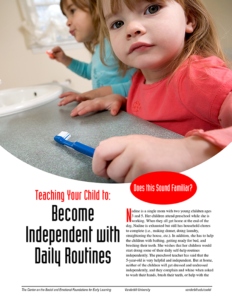
Teaching Your Child to Become Independent with Daily Routines
Young children can learn how to do simple daily self-help activities—they just need to be taught what to do. When teaching a child to do self-care skills, you first need to know what you can typically expect of a young child, your child’s skill level, and how to provide clear and simple instructions about how…
-
·
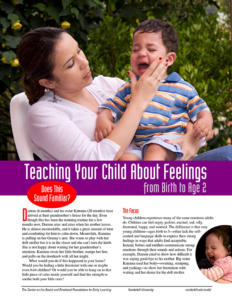
Teaching Your Child About Feelings – from Birth to Age 2
Understanding feelings is an important part of a child’s social emotional development. Babies and toddlers experience feelings just like you do, and know when you are feeling happy or down as well. When you use words to describe emotions, share in their good feelings, and comfort them when they feel sad or overwhelmed, young children…
-
·
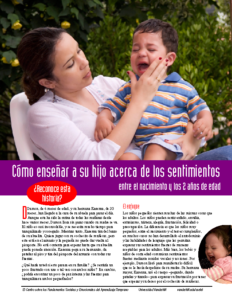
Teaching Your Child About Feelings – from Birth to Age 2 (Spanish)
Understanding feelings is an important part of a child’s social emotional development. Babies and toddlers experience feelings just like you do, and know when you are feeling happy or down as well. When you use words to describe emotions, share in their good feelings, and comfort them when they feel sad or overwhelmed, young children…
-
·
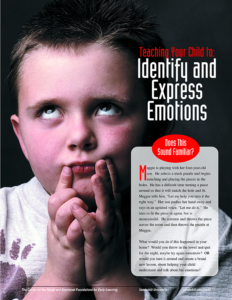
Teaching Your Child to Identify and Express Emotions
Young children deal with many of the same emotions adults do. Children get angry, sad, frustrated, nervous, happy, or embarrassed, but they often do not have the words to talk about how they are feeling. Instead, they sometimes act out these emotions in very physical and inappropriate ways. This four-page handout describes specific steps and…
-
·
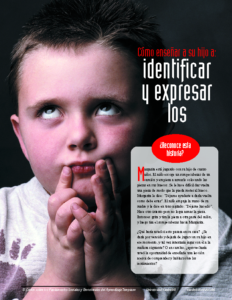
Teaching Your Child to Identify and Express Emotions (Spanish)
Young children deal with many of the same emotions adults do. Children get angry, sad, frustrated, nervous, happy, or embarrassed, but they often do not have the words to talk about how they are feeling. Instead, they sometimes act out these emotions in very physical and inappropriate ways. This four-page handout describes specific steps and…
-
·
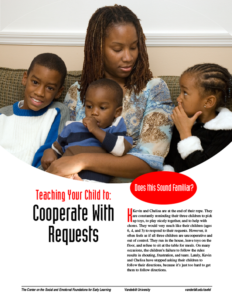
Teaching Your Child to Cooperate with Requests
Young children can learn to follow adult expectations, including performing simple chores, if the expectations are developmentally appropriate (meaning they match what can be expected for children at that age) and are taught to the child. This four-page handout provides information on what you might expect from your preschooler and some tips for helping your…
-

·
Teaching Your Child to Cooperate with Requests (Spanish)
Young children can learn to follow adult expectations, including performing simple chores, if the expectations are developmentally appropriate (meaning they match what can be expected for children at that age) and are taught to the child. This four-page handout provides information on what you might expect from your preschooler and some tips for helping your…