-
·
Preschool Module 3: Teaching Social-Emotional Skills
Promoting social-emotional development is core to the Pyramid Model. This module provides training on the practices for teaching friendship skills, emotional literacy, self-regulation, and problem-solving.
-
·
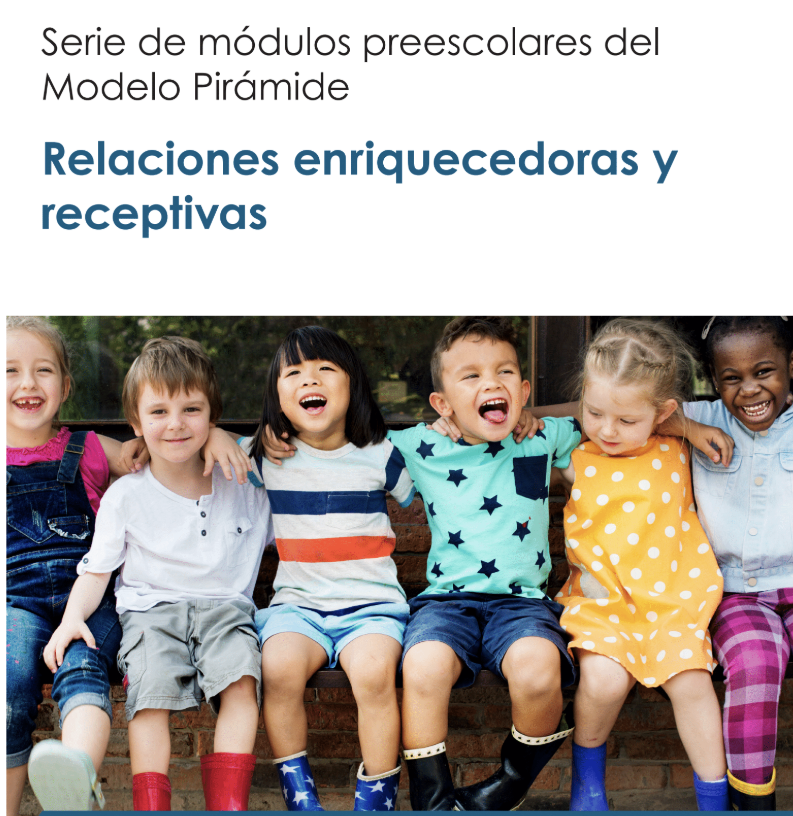
Preschool Module 1: Nurturing and Responsive Relationships
Establishing nurturing and responsive relationships within a caring community is the foundation of the Pyramid Model. This training focuses on practices for building relationships with children, promoting relationships between children, relationships with families that affirm family culture and identity, and relationships with team members.
-

·
Preschool Module 6: Overview of Prevent-Teach-Reinforce for Young Children
In this module, practitioners learn about the steps of Prevent-Teach-Reinforce for Young Children (PTR-YC) and how PTR-YC is used as a manualized process for conducting a functional behavioral assessment and developing a behavior support plan.
-
·
Preschool Module 5: Addressing Challenging Behavior
This module provides the practices for understanding child challenging behavior, how to respond to challenging behavior, becoming aware of bias in responding, de-escalating behavior, and the components of developing a behavior support plan for children with persistent challenging behavior.
-
·
Preschool Module 4: Individualized Teaching of Social-Emotional Skills
This module guide practitioners in how to individualize instruction on social-emotional skills for children who need more targeted supports. Practices that are taught include: teaching systematically, peer-mediated intervention, planning for embedded instruction, and progress monitoring.
-

·
Preschool Module 2: High-Quality, Supportive Environments
This module focuses on the practices for establishing high-quality supportive classroom environments that promote social-emotional skill development and prevent challenging behavior. Practices related to schedules, routines, transitions, promoting engagement, expectations, and rules are addressed in the workshop.
-
·
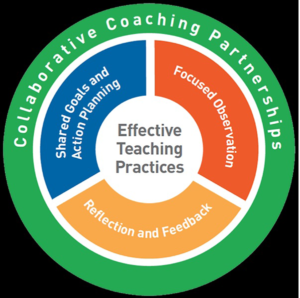
ECTA Learning Lab on Coaching for Practice Change
Explore the Learning Lab on Coaching for Practice Change hosted by ECTA to provide information on how coaching can be supported by states and used within programs to improve implementation of evidence-based practices. The four sessions provide presentations, tools, and resources on 1) Innovations for the delivery of coaching; 2) Statewide implementation, systems considerations and…
-
·
Introduction to the Pyramid Model
This module introduces the Pyramid Model framework to participants and should be used before the other modules. Topics include: the relationship of the Pyramid Model to prevention science, equity, inclusion, trauma-informed care, anti-bias practice and the use of data for decision-making, understanding child behavior, and the research that provides an evidence-base for the use of…
-
·
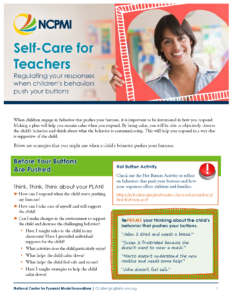
Self-Care for Teachers
When children engage in behavior that pushes your buttons, it is important to be intentional in how you respond. This resource provides strategies that you might use when a child’s behavior pushes your buttons to help you respond in a way that is supportive of the child.
-
·
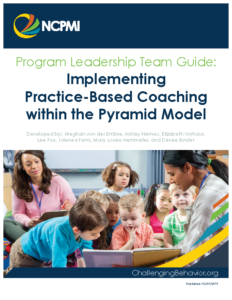
Program Leadership Team Guide: Implementing Practice-Based Coaching within the Pyramid Model
This resource provides Pyramid Model leadership teams with guidance for implementing Practice-Based Coaching within their programs and developing plans for three essential elements of coaching: 1) Getting Ready for Coaching; 2) Enacting Coaching; and 3) Evaluating Coaching.